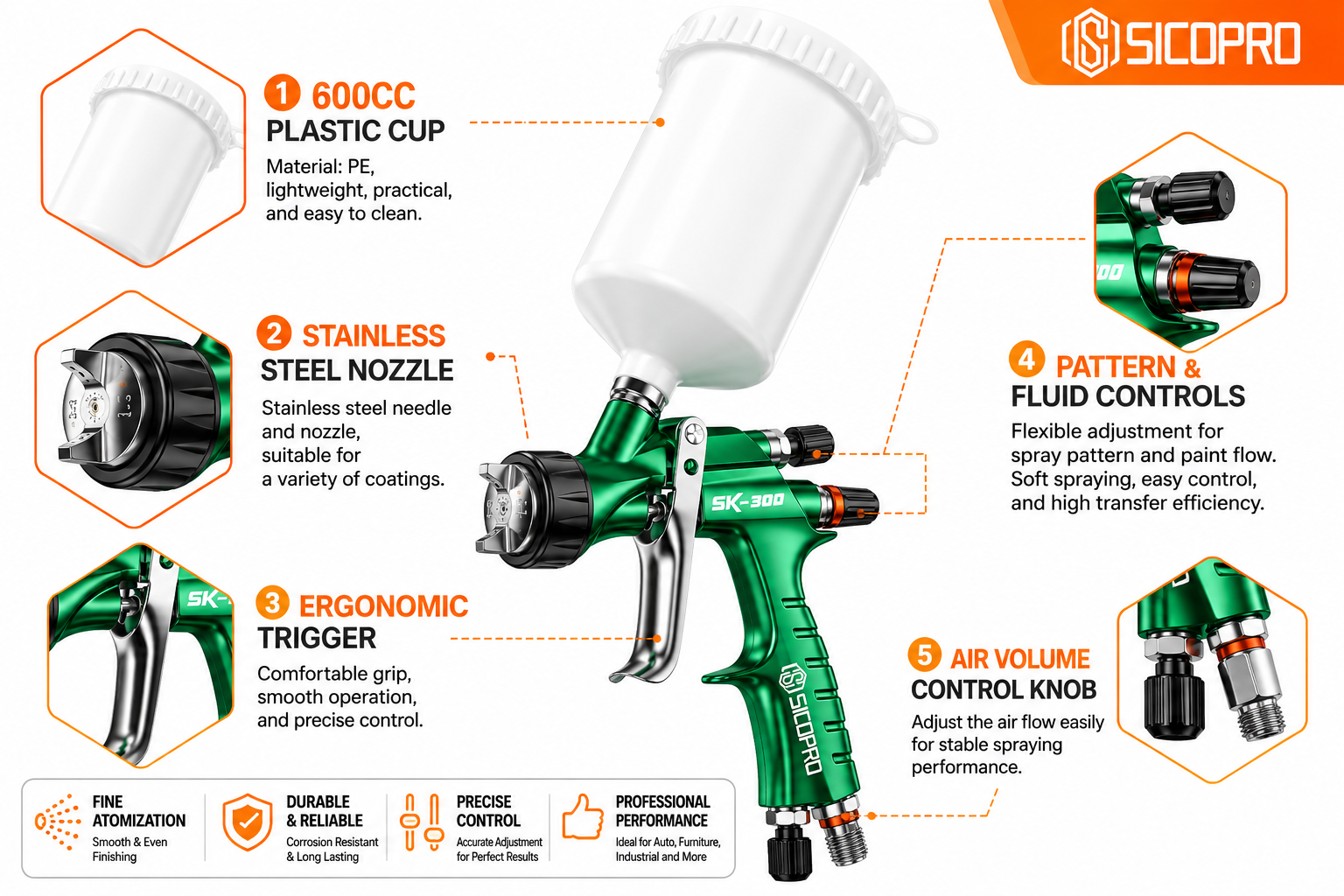
Author: Joan
Recessed structures do not behave like open exterior panels. Airflow entering a narrow cavity can rebound from the rear wall, disturb the wet film, and carry atomized material back toward the operator. At the same time, direct spraying into the corner can overload the entrance edges while leaving the deepest area undercoated.
1. Inspect and Plan the Spray Path
Before mixing paint, illuminate the component from two directions and identify closed corners, return flanges, mounting tabs, channels, and surfaces hidden behind the opening. Mark the areas that cannot be reached with a perpendicular pass. Spray the deepest surfaces first, followed by sidewalls, return edges, and exposed faces. This sequence prevents the outer wet film from receiving unnecessary overspray while the gun is aimed into the recess.
2. Reduce Fan Width and Fluid Delivery
Begin with a narrow oval pattern rather than a completely round pattern. A round pattern can concentrate too much material in the center and increase the risk of runs. Reduce fluid output gradually until the gun produces a controlled wet film during a short pass. Do not close the fluid control so far that atomization becomes unstable. When configuring lvlp spray gun Professional Automotive Tools, confirm the spray pattern on a test card at the same pressure and distance planned for the component. Use the coating manufacturer’s recommended pressure as the baseline. Excessive pressure increases rebound and dry overspray inside confined spaces.
3. Control Gun Angle at the Opening
Position the gun so the fan enters the recess at approximately 30–45 degrees rather than pointing directly at the rear wall. Spray one side from the opposite angle, then reverse the approach for the second side. Keep the nozzle close enough to maintain wet transfer, but do not insert the air cap so deeply that airflow becomes restricted. A practical starting distance is approximately 100–150 mm, depending on the nozzle, fan size, and coating viscosity. Move the forearm rather than rotating only the wrist. Wrist rotation changes distance rapidly and creates heavy deposits on the nearest edge.
4. Use Short, Controlled Passes
Start gun movement before pulling the trigger and release it before stopping. Use short passes that extend slightly beyond the recess opening. Where equipment design permits, use controlled partial-fluid triggering for tight corners, but maintain sufficient air to preserve atomization. Do not repeatedly pulse an air spray gun at the same point because each trigger cycle can deposit a heavy spot. Apply two or three light directional passes instead of one overloaded pass. Allow the specified flash between layers so solvent can escape from corners and seams.
5. Verify Coverage and Film Build
Inspect the recess with a narrow LED light after each coat. Look for dry texture, transparent edges, trapped overspray, or glossy pools at the bottom. Use a wet-film gauge on accessible test sections and compare the result with a prepared sample panel. Avoid correcting a shadow area by spraying directly into the cavity for several seconds. Re-approach it from a different angle with reduced output. Record fan width, dynamic pressure, nozzle size, distance, fluid setting, and pass sequence. For consistent atomization in the next process stage, evaluate front-mounted air-pressure stabilization before changing material viscosity or gun components.
SEO Keywords
Narrow-fan automotive spray gun, compact component coating tool, recessed-area spray nozzle, gravity-feed detail gun, automotive touch-up equipment, precision fan-control valve, mini pressure regulator, detail spray air cap, small-part paint cup, automotive coating test card, recessed component refinishing, narrow-channel paint application, inner-cavity coating service, door-jamb spray technique, wheel-opening refinishing, bracket coating process, compact-part surface preparation, confined-space atomization control, rebound overspray reduction, edge buildup prevention, spray angle calibration, fluid-output adjustment, narrow-pattern setup, recess shadow correction, layered corner application, wet-film thickness control, spray-distance standardization, trigger timing training, automotive paint troubleshooting, difficult-access coating optimization, collision repair painters, automotive refinish technicians, vehicle restoration workshops, custom paint specialists, automotive component manufacturers, body shop supervisors, fleet maintenance centers, spray-equipment distributors, automotive coating suppliers, refinishing training centers