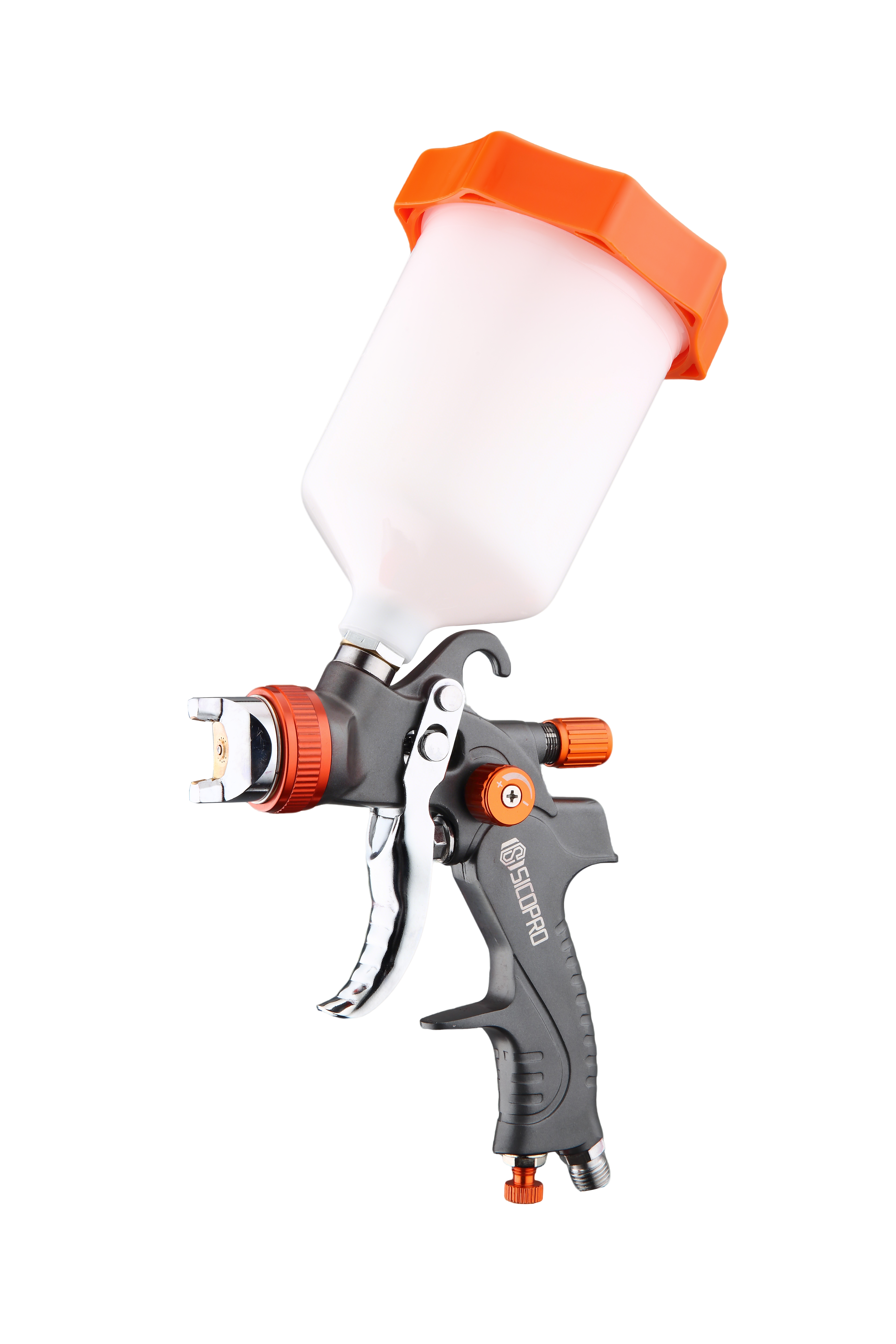
Preventing Dry Spray in High-Temperature Conditions: Low-Pressure, Slower-Pass Application
Author: Joan
High ambient temperature changes the complete spray process. Solvent leaves the droplets faster, the wet edge shortens, overspray becomes less able to melt into the film, and the coating may reach the panel partially dry. The result can be rough texture, weak gloss, poor metallic orientation, excessive material consumption, or reduced intercoat adhesion. Correcting the problem requires coordinated control of temperature, reducer speed, pressure, distance, fluid delivery, and pass timing.
1. Measure the Actual Conditions
Record booth air temperature, panel temperature, mixed-material temperature, and relative humidity before spraying. The panel may be significantly hotter than the booth after baking, sunlight exposure, or extended infrared drying. Do not rely on the wall display alone. Use a calibrated infrared thermometer on several panel zones and confirm that the surface is within the coating manufacturer’s approved application range. Allow overheated panels to stabilize before mixing material.
2. Select the Correct Reducer and Hardener
Choose reducer and activator speed according to the technical data sheet, panel size, airflow, and expected application time. A slower solvent package extends open time and supports droplet coalescence, but it must remain compatible with the coating system. Do not add extra reducer beyond the specified ratio to make the product appear wetter. Over-reduction lowers solids, changes film build, and can create solvent entrapment or durability problems.
3. Establish Dynamic Pressure
Measure inlet pressure with the trigger fully pulled. Begin at the normal validated setting, then reduce pressure in small increments of approximately 0.1 bar or 1–2 psi while observing atomization on a test panel. With lvlp spray gun Professional Automotive Tools, the goal is not the lowest possible reading; it is the lowest pressure that still produces a uniform droplet size and stable fan. If the center becomes coarse or the fan collapses, restore the previous setting.
4. Shorten Distance Before Slowing Excessively
Bring the gun slightly closer within the manufacturer’s approved range so droplets spend less time in hot moving air. Keep the spray axis perpendicular. A distance reduction of 10–20 mm can improve wetness, but moving too close may overload the center and cause runs. After distance is stable, slow the pass only enough to form a continuous wet film. Large speed changes create heavy overlap bands and inconsistent film thickness.
5. Protect the Wet Edge
Plan the panel sequence before pulling the trigger. Use consistent overlap, avoid unnecessary pauses, and work from natural break lines whenever possible. On large roofs, hoods, or vehicle sides, divide the job only where the coating procedure permits. Minimize booth door openings and uncontrolled airflow. An air spray gun cannot compensate for an exhaust stream that strips solvent from the fan before the material reaches the surface.
6. Verify Film Formation
Check the reflection immediately after each section. A healthy film appears continuous and levels progressively; dry spray looks grainy and remains dull at the overlap edge. Confirm flash by the product’s visual and tactile criteria rather than using a fixed time from cooler conditions. Hot surfaces may flash quickly on top while retaining solvent underneath, so follow the specified recoat window.
7. Document the Hot-Weather Setup
Record panel temperature, reducer and activator selection, viscosity, nozzle size, dynamic pressure, distance, travel speed, overlap, and flash interval. Produce a retained test panel whenever the temperature range changes significantly. If roughness persists after process correction, inspect air cleanliness, cap condition, material filtration, and nozzle integrity before adding more solvent or pressure.
A disciplined low-pressure, controlled-distance, moderate-speed method keeps droplets wet enough to merge while preserving atomization. This reduces dry spray, improves gloss, stabilizes color orientation, and produces repeatable film build during demanding high-temperature automotive refinishing.
SEO Keywords
high-temperature automotive painting, dry spray prevention, hot-weather refinishing, low-pressure spray technique, slower spray pass, panel temperature measurement, booth temperature control, coating open-time management, slow reducer selection, activator speed selection, dynamic pressure adjustment, droplet coalescence, wet-edge protection, automotive paint leveling, rough texture correction, gloss retention, metallic orientation control, intercoat adhesion, solvent evaporation control, hot panel cooling, infrared temperature measurement, spray distance optimization, controlled overlap technique, large-panel refinishing, hood painting procedure, roof refinishing technique, vehicle-side coating sequence, airflow management, test-panel validation, paint viscosity control, automotive coating documentation, collision repair painter, body shop process engineer, vehicle restoration technician, custom paint professional, fleet refinishing operator, automotive paint instructor, coating manufacturer support, spray equipment supplier, refinishing quality supervisor