By Joan
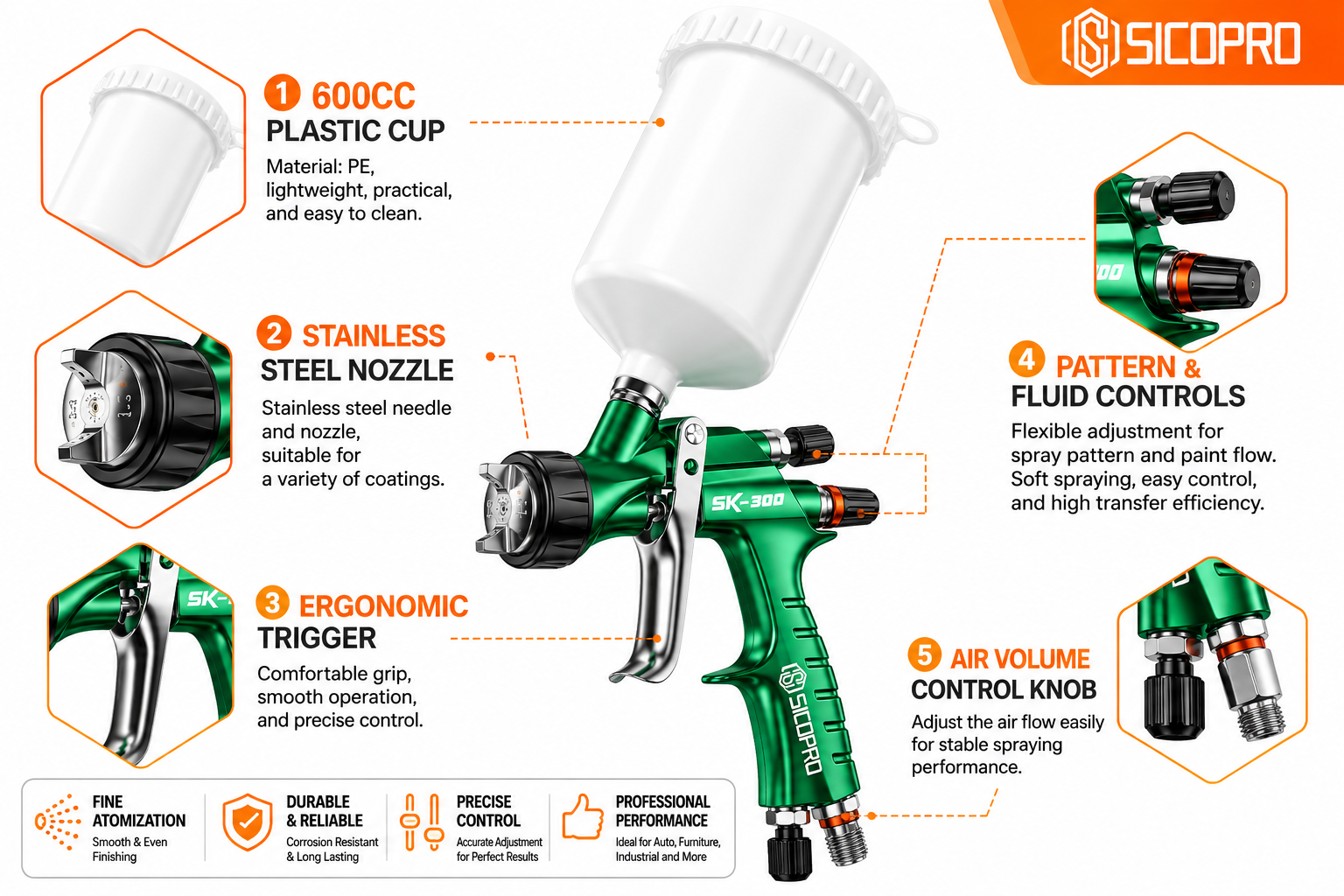
Air or coating leakage around a spray-gun threaded joint is more than a cleanliness problem. A small air leak can reduce dynamic pressure at the cap, destabilize the fan, and force the painter to compensate with excessive regulator pressure. A fluid leak can draw air into the material path, contaminate the gun body, and produce intermittent spitting. Correct repair requires identifying the leaking circuit, replacing the correct seal, cleaning the mating surfaces, and tightening the assembly to the manufacturer’s specification.
1. Identify whether the leak is air-side or fluid-side
Clean and dry the gun before testing. Connect regulated air, close the fluid control, and apply a manufacturer-approved leak-detection solution to the air inlet, valve plugs, regulator threads, and air-cap retaining area. Growing bubbles indicate an air-side leak. Do not spray solvent or flammable cleaner during this test.
For a fluid-side check, add a small quantity of approved test liquid, hold the gun over a waste container, and inspect the cup connection, fluid nozzle seat, needle packing, and threaded plugs. Material appearing without trigger movement usually points to a loose nozzle, damaged seat, worn needle, or failed packing.
2. Disassemble without damaging sealing surfaces
Disconnect the air supply, empty the cup, and release residual pressure. Use the correct manufacturer-specified wrench rather than adjustable pliers. Support the gun body while loosening the component so torque is not transferred through the nozzle or trigger linkage.
Lay parts in removal order. Inspect each O-ring for flattening, cuts, swelling, brittleness, or paint adhesion. Examine threaded shoulders and sealing faces under strong light. Cross-threading, burrs, or dried coating can prevent a new seal from seating correctly.
A lvlp spray gun Professional Automotive Tools configuration must use seal materials compatible with the coating system and cleaning solvent. Reduced air consumption does not reduce the need for correct elastomer selection.
3. Select and install the replacement seal
Match the replacement by part number, inside diameter, cross-section, and material.
Clean the groove with a lint-free swab and approved cleaner.
Allow all solvent to evaporate before assembly.
Apply only a thin film of manufacturer-approved gun lubricant.
Roll the O-ring into the groove without stretching or twisting it.
Start threaded parts by hand for several turns before using a wrench.
Do not use general-purpose petroleum grease, silicone sealant, or excessive thread tape unless the equipment manufacturer explicitly approves it. Loose tape fragments can enter internal passages, and silicone contamination can create fisheyes on refinished panels.
4. Set packing tension correctly
Needle packing should be tightened only enough to stop leakage while allowing smooth needle return. Excessive packing tension delays trigger response and prevents the needle from closing fully. With an air spray gun, pull and release the trigger several times after adjustment. The trigger should return immediately without sticking or visible fluid seepage.
5. Verify the repair under operating conditions
Reconnect air and check dynamic pressure with the trigger fully open. Repeat the bubble test, then conduct a one-second paper pattern test and a five-second continuous-flow test. Confirm that the fan remains stable, the gun does not pulse, and no coating collects around repaired joints.
Record the seal part number, lubricant, date, and technician. Inspect high-use guns weekly and replace seals at the first sign of deformation rather than waiting for production failure. The next controlled process is low-flow multi-layer thin-coat application, explained in Article 3.
SEO Keywords
spray-gun O-ring replacement, threaded joint air leak, fluid seal maintenance, needle packing adjustment, spray-gun leak test, automotive paint-gun repair, solvent-resistant seals, gun lubricant selection, fluid nozzle sealing, spray-pattern verification, body-shop tool maintenance, compressed-air leak diagnosis, spray-gun thread care, refinishing equipment service, seal groove cleaning, trigger return inspection, pressure-hold testing, paint leakage repair, spray-gun preventive maintenance, coating-system compatibility, gun-body inspection, air-inlet sealing, cup-connection leak, nozzle-seat inspection, packing-nut adjustment, O-ring deformation, spray-equipment reliability, automotive refinishing tools, collision-repair maintenance, professional spray-gun service, paint-shop quality control, leak-detection solution, dynamic pressure testing, fluid-path contamination, thread damage prevention, seal replacement procedure, gun repair technician, body-shop equipment care, paint defect prevention, spray-gun performance testing.