By Joan
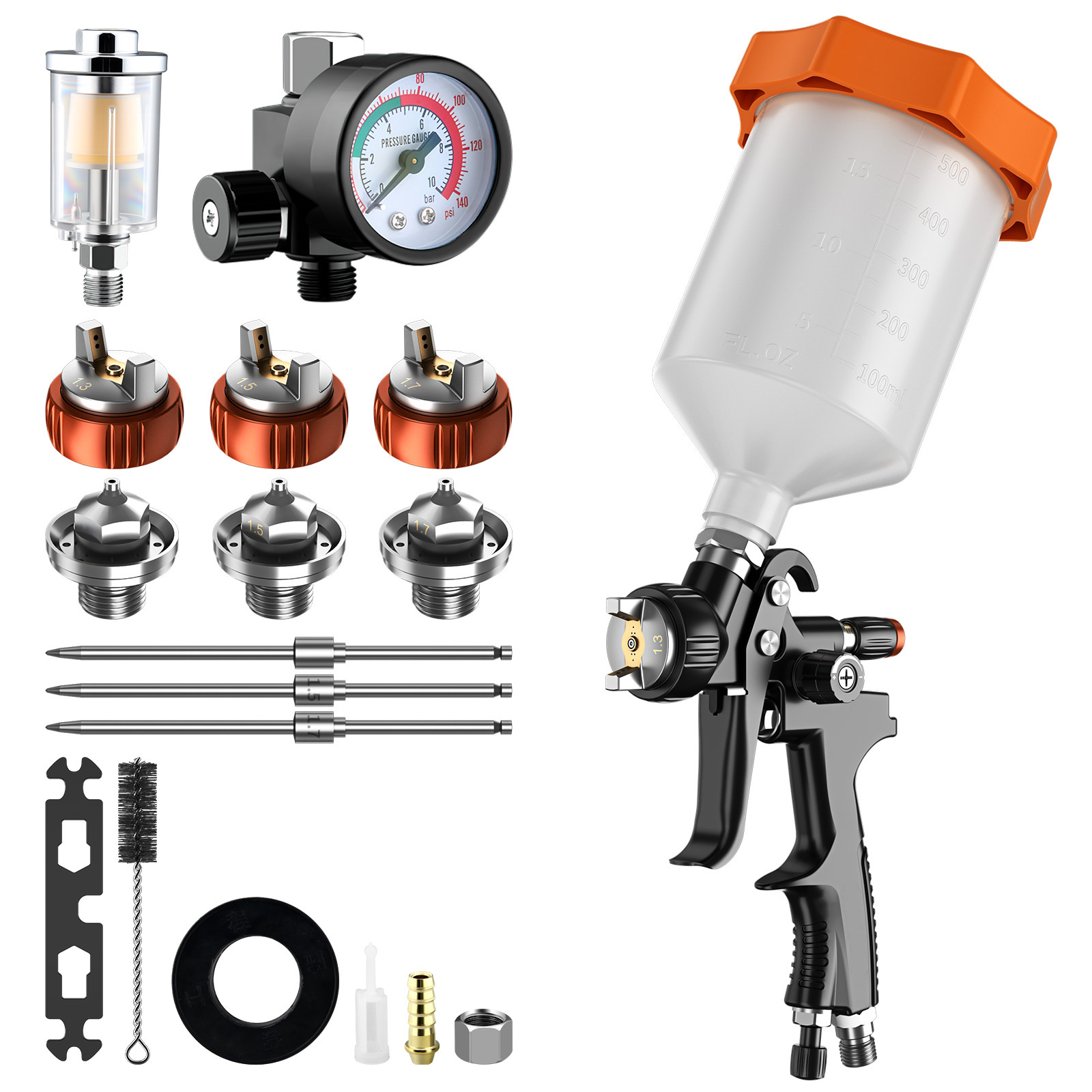
A spray gun is engineered as a matched air cap, fluid nozzle, needle, baffle, and gun-body system. Replacing only the fluid nozzle with a part that looks similar can change the relationship between the liquid stream and the surrounding atomizing air. Even when the nominal nozzle diameter is the same, differences in tip length, taper, seat depth, outlet geometry, or manufacturing tolerance can produce fan distortion, coarse droplets, pulsing, dry edges, or an overloaded center.
1. Verify identification before assembly
Record the gun model, serial range, original air-cap code, nozzle code, needle code, and stated fluid-tip size. Compare the replacement part with the manufacturer’s parts chart rather than relying on package descriptions alone. Check whether the nozzle belongs to the same cap set and pressure technology.
A lvlp spray gun Professional Automotive Tools system can be especially sensitive to incorrect air-cap-to-nozzle spacing because its atomization is designed around controlled air volume and cap geometry. A physically threaded fit does not prove functional compatibility.
2. Compare old and new nozzles
Clean both parts and inspect them under magnification. Compare total length, front projection, seat angle, thread shoulder, outlet diameter, and the position of any alignment surfaces. Do not insert drills or gauges that could scratch the orifice. Check the original part for erosion, ovality, impact marks, or dried coating that might make the replacement appear different.
Install each nozzle by hand until seated, then tighten only to the specified torque. Confirm that the air cap sits concentrically and does not contact the nozzle. With the needle installed, pull the trigger and verify full, smooth travel. A nozzle seated too deeply or too shallowly can alter needle opening and material output.
3. Conduct a controlled A/B spray test
Use the same coating batch, viscosity, cup fill level, hose, dynamic pressure, fan setting, fluid-control position, distance, and trigger duration for both configurations. Start with the known original matched set, then test the replacement nozzle with the original cap.
Apply a one-second static pattern to masking paper.
Measure overall fan height and usable wet width.
Inspect upper and lower horn balance.
Check center loading, dry tails, split pattern, and coarse droplets.
Apply a five-second continuous spray to detect pulsing.
Make two passes on a test panel and compare texture and film build.
When evaluating an air spray gun, measure dynamic pressure during each test rather than assuming the regulator remains unchanged. Repeat the test if compressor cycling or hose restriction affects airflow.
4. Interpret common mismatch defects
A heavy center with weak edges may indicate that the replacement tip projects too far into the cap or that horn air is not correctly interacting with the fluid stream. Dry split edges can result from excessive cap air relative to material flow. One-sided fan loading may indicate poor concentricity, a damaged seat, or uneven cap clearance. Pulsing can occur when the needle and nozzle taper do not match or when the fluid passage is partially restricted.
On the test panel, look for orange peel, striping, uneven hiding, overspray accumulation, localized sagging, and gloss variation. Do not correct a hardware mismatch by permanently changing pressure, viscosity, or reducer speed; doing so creates an unstable setup that may fail with another coating.
5. Establish the acceptance standard
Approve the replacement only when component codes are compatible, the static pattern is symmetrical, continuous delivery is stable, and the test-panel finish matches the original set. Replace the nozzle and needle as a specified pair when required. If the air cap is worn or damaged, replace the complete matched fluid set rather than mixing generations.
Label verified components and store them together. Record test material, viscosity, pressure, output, fan dimensions, and observed defects. This prevents technicians from returning visually similar but incompatible parts to production and protects finish consistency across future repair orders.
SEO Keywords
spray-gun nozzle compatibility, original air-cap testing, replacement nozzle defects, matched fluid set, nozzle and needle pairing, spray-pattern comparison, automotive paint-gun parts, air-cap geometry, fluid-tip concentricity, nozzle seat inspection, fan distortion diagnosis, coarse droplet troubleshooting, spray-gun pulsing, center-loaded pattern, dry fan edges, component code verification, spray-gun A/B testing, dynamic pressure measurement, fluid output comparison, test-panel evaluation, atomization consistency, spray nozzle replacement, air-cap clearance, spray-gun parts chart, coating texture defects, automotive refinishing equipment, paint-gun maintenance, nozzle wear inspection, fluid-orifice erosion, trigger travel verification, spray component tolerance, refinishing defect prevention, collision-repair tools, professional spray-gun service, paint application quality, matched air system, coating film uniformity, spray equipment validation, body-shop quality control, automotive spray testing.