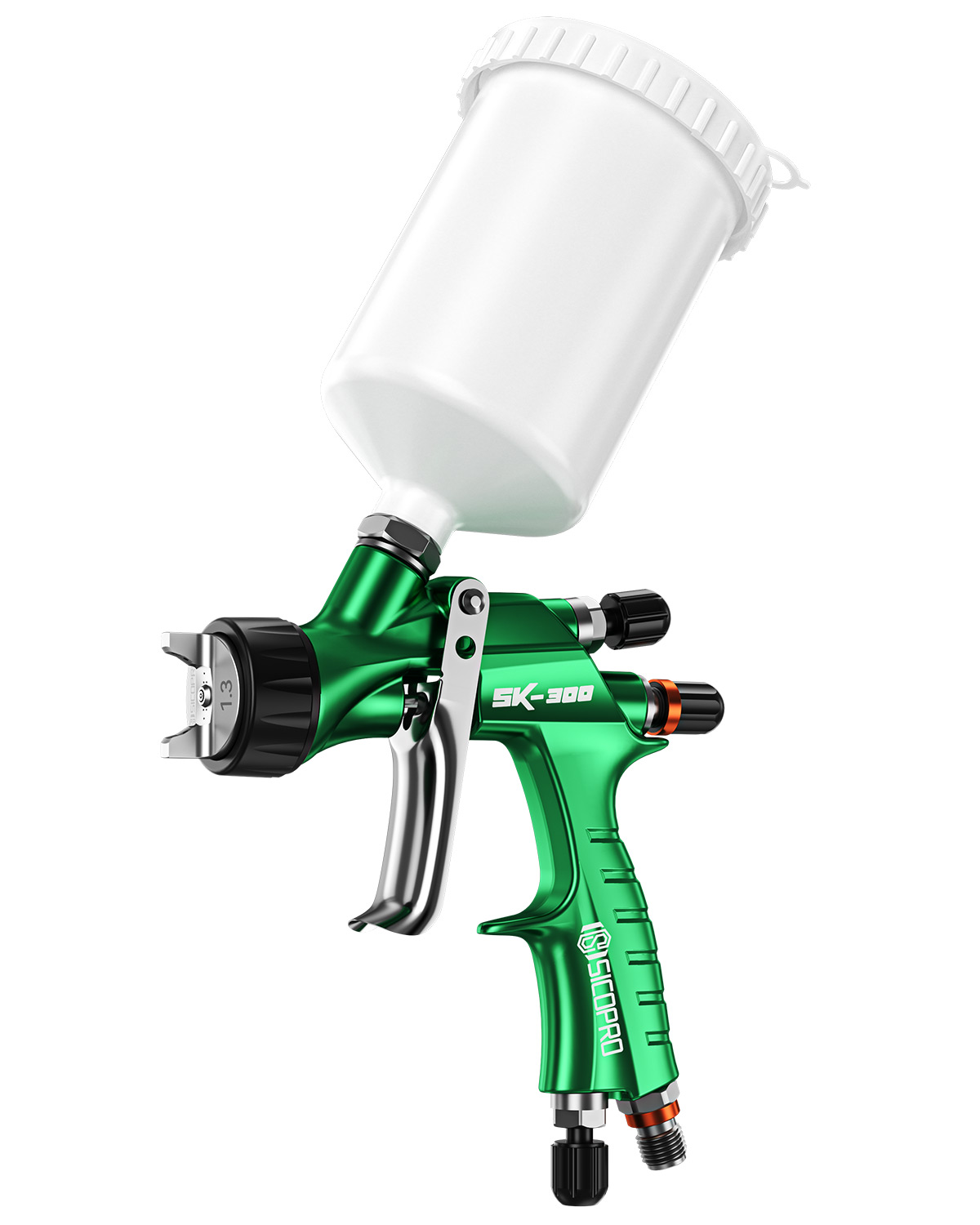
Why Improper Needle Cleaning Leads to Delayed Paint Output from Spray Guns
Delayed paint output is a serious spray gun problem because it makes the painter lose control of stroke timing. When the trigger is pulled, air starts immediately, but paint arrives late. The result is dry edges, patchy blend zones, uneven film build, and sometimes sudden spitting after the material finally releases. In automotive refinishing, this defect can ruin basecoat orientation and clearcoat flow.
The most common cause is improper needle cleaning. The needle controls fluid opening and closing at the nozzle seat. If dried paint, primer, sealer, or clearcoat residue remains on the needle tip, the needle cannot move smoothly or seat correctly. Even a thin coating ring can delay material flow.
A dirty nozzle seat creates the same issue. When the trigger is pulled, the needle retracts, but residue around the seat restricts the initial paint path. Pressure builds behind the blockage, then releases suddenly. This causes delayed output followed by a small burst of material. Proper maintenance is essential for LVLP Spray Gun Non-spattering results.
Needle packing should also be checked. If packing is too tight or contaminated with dried material, the needle movement becomes sluggish. The painter may feel the trigger moving normally, but the needle response inside the gun is not precise. This delay is especially noticeable during short strokes, edge repair, and small spot refinishing.
To clean correctly, first empty the cup and flush the gun with approved solvent. Remove the air cap, fluid nozzle, and needle according to the manufacturer’s sequence. Wipe the needle with a lint-free cloth. Use a soft brush for the nozzle and air cap. Never scrape precision parts with hard steel tools. Damage to the needle tip or nozzle orifice can permanently affect atomization.
Inspect the needle under good light. Look for bent tips, scratches, dried clearcoat, or uneven wear. If the needle tip is damaged, cleaning will not solve the delay. Replace the needle and nozzle as a matched set when required.
After cleaning, reassemble the air spray gun and test it with reducer or clean solvent before loading paint. Pull and release the trigger several times. Fluid should start and stop instantly. Then spray a test pattern on paper. A clean gun should produce a stable fan with Uniform coverage, no tails, no spit marks, and no delayed center loading.
Daily cleaning discipline matters. Do not leave mixed coating in the gun during long breaks. Do not let clearcoat cure around the needle. At the end of each job, clean the fluid path before residue hardens. For professional results, LVLP Spray Gun Non-spattering performance depends not only on gun design but also on the cleanliness of the needle, nozzle, and internal fluid passage.
When the needle responds instantly, the painter can control overlap, stroke timing, and film thickness. That is the foundation of Uniform coverage in every refinishing operation.
SEO Keywords
paint spray gun, automotive spray gun, LVLP spray gun, HVLP paint sprayer, air spray gun, auto body paint gun, car paint gun, refinishing spray gun, professional spray gun, pneumatic paint sprayer, gravity feed spray gun, compressed air paint gun, paint gun for car, vehicle spray gun, automotive paint sprayer, detail spray gun, touch up spray gun, paint spray tool, high pressure spray gun, low pressure spray gun, non-spattering spray gun, uniform coverage spray gun, automotive refinishing tool, car body repair shop, collision repair painter, spray booth technician, coating application specialist, industrial coating gun, basecoat spray gun, clearcoat spray gun, primer spray gun, air cap cleaning, spray gun needle cleaning, spray pattern adjustment, fan width adjustment, paint atomization control, overspray reduction, deep cavity spraying, flammable coating spraying, professional automotive refinishing
READ MORE