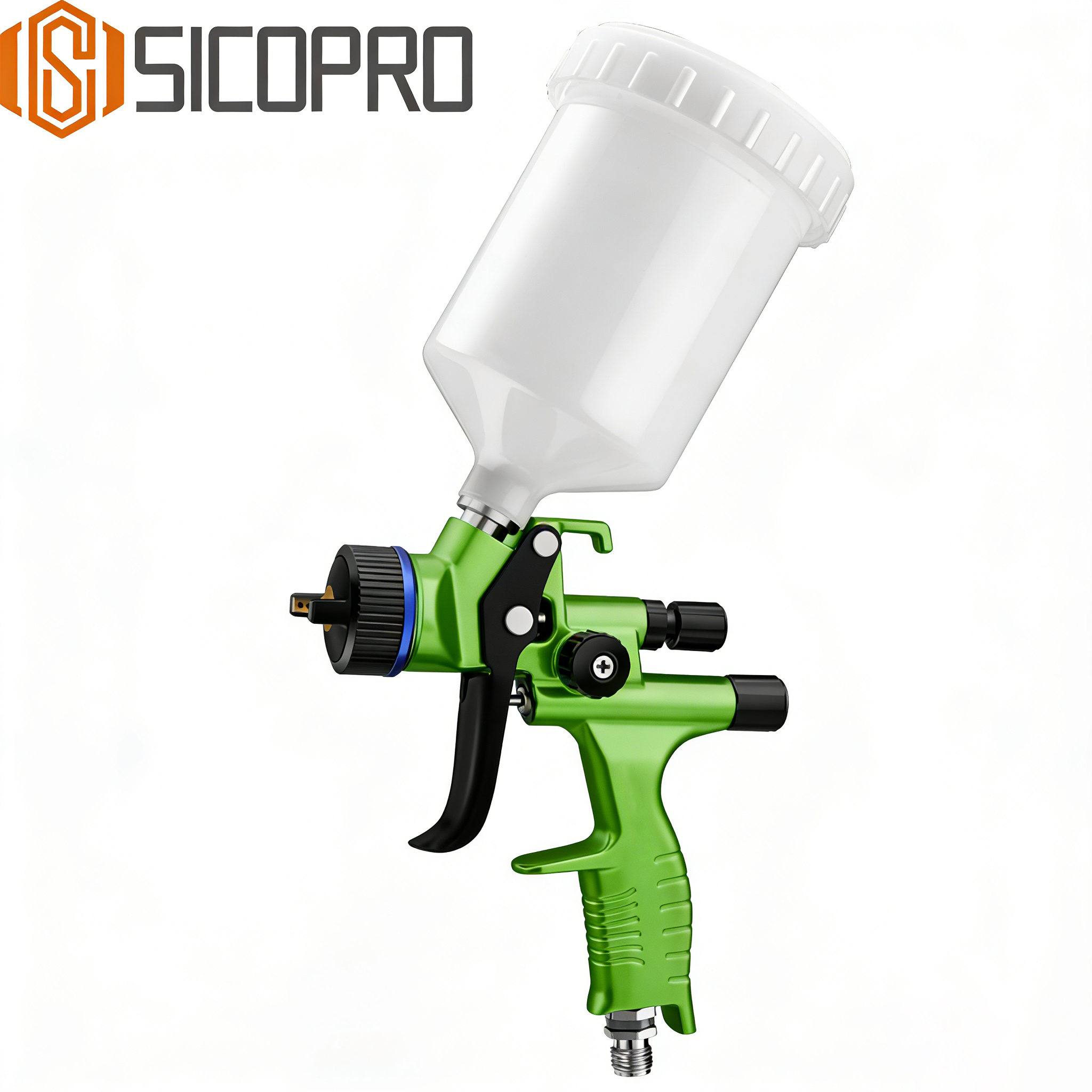
Standard Development and Quality Control Workflow for Automotive Spray Guns
In professional automotive refinishing, the performance of a spray gun directly determines coating quality, atomization consistency, and paint transfer efficiency. For manufacturers developing professional tools, establishing a clear development and quality control workflow is critical.
1. Engineering Design and Fluid Dynamics Planning
Engineers analyze internal airflow channels, nozzle geometry, and needle alignment to ensure stable atomization performance. Key factors include nozzle size, air cap structure, trigger response, and airflow pressure balance.
2. Prototype Manufacturing and Assembly Testing
Precision machining ensures the needle and nozzle alignment remain accurate. Each prototype spray gun undergoes manual assembly inspection to verify sealing performance, trigger stroke stability, and paint flow control.
3. Atomization and Spray Pattern Calibration
Technicians perform controlled spray tests using standard automotive coatings to analyze fan pattern width, droplet size, and transfer efficiency. Proper calibration ensures consistent atomization performance in professional painting environments.
4. Durability and Stability Testing
Durability testing includes trigger cycle testing, solvent resistance evaluation, and pressure leakage checks. These tests ensure long‑term stability during intensive body shop operations.
5. Final Quality Control
Final inspection verifies machining precision, spray pattern consistency, and airflow stability. These processes ensure every Sicopro spray gun meets professional automotive refinishing standards.
Keywords: sicopro spray gun, LVLP spray gun, automotive spray gun, car paint spray gun, professional spray gun, compressed air paint gun
READ MORE
Professional Spray Gun Inspection Procedures Before Automotive Painting