Every painter eventually sees a panel that does not lay down as expected. The surface may look sandy, the clear may hold orange peel, or the fan may leave heavy and light bands. Instead of guessing, a professional technician should diagnose the process in sequence: air supply, gun setup, material condition, distance, speed, and overlap. A controlled lvlp spray gun Professional Automotive Tools method makes defects easier to isolate and correct before the job turns into sanding and rework.
Dry Spray Diagnosis
Dry spray usually appears as a rough, dusty texture at the edge of the fan or across the panel. Start by checking gun distance. If the gun is too far from the surface, droplets lose solvent before landing. Bring the gun back to the recommended 6 to 8 inch range and keep it square to the panel. Next, check reducer speed. In hot conditions, a fast reducer can flash before the coating flows. If the product allows, move to a slower reducer or reduce booth temperature within specification.
Pressure can also create dry spray. Excessive atomizing air can break the material too aggressively and push overspray away from the wet film. Set pressure with the trigger pulled, then make one adjustment at a time. Even a clean air spray gun can create a dry finish if the painter combines high pressure, long distance, and fast hand speed.
Orange Peel Correction
Orange peel is often caused by poor flow-out. Check whether the film is too dry, too thick, or not atomized correctly. If the texture forms immediately behind the gun, inspect fluid delivery and fan width. A narrow fan may concentrate material and create uneven build, while low pressure may leave droplets too large to level. Verify mixing ratio, induction time if required, and product temperature. Cold clearcoat is thicker and harder to atomize.
Uneven Fan Pattern
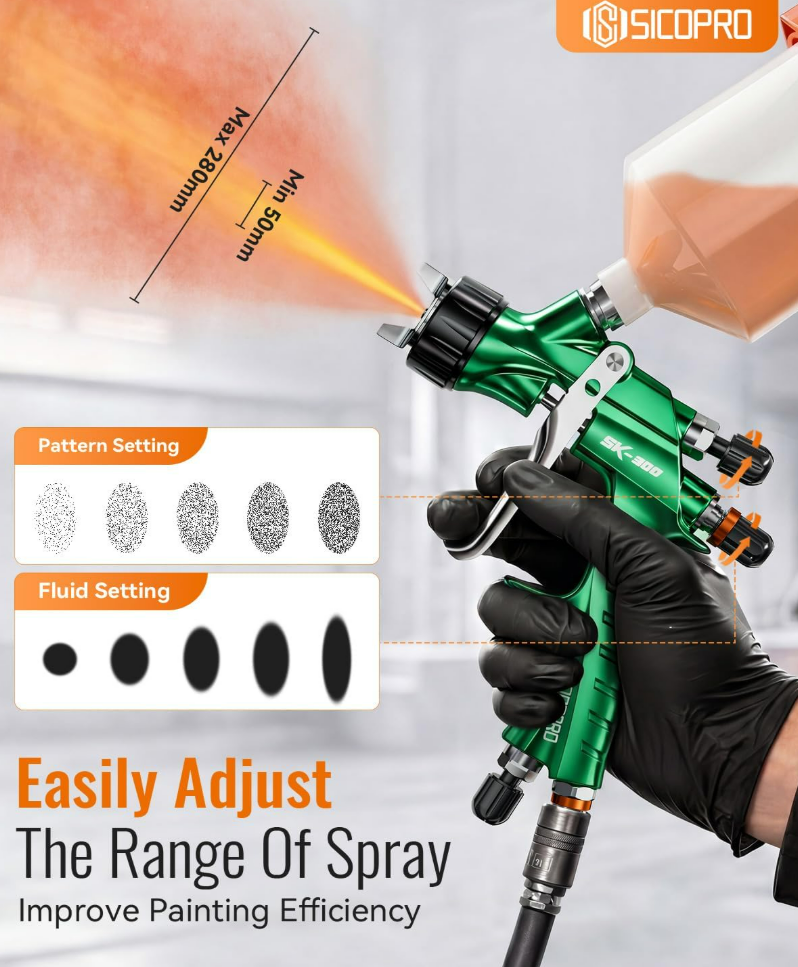
If the pattern is heavy on one side, clean the air cap and rotate it 180 degrees for testing. When the problem follows the cap, the cap is blocked or damaged. If the problem stays in the same direction, inspect the fluid tip and needle. A bent needle, damaged tip seat, or dried material can disturb fluid flow. Do not continue spraying a vehicle with a distorted pattern; it will create striping, uneven clear build, and visible repair boundaries.
Sags and Heavy Edges
Runs usually come from excessive fluid, slow hand speed, close distance, or poor edge control. On vertical panels, increase travel speed slightly around body lines, handles, and lower edges. Do not aim the full center of the fan directly into panel gaps. Trigger off at the edge and avoid stacking material where passes overlap at corners. If clear begins to move, stop adding material and allow it to flash according to the product procedure.
Build a Troubleshooting Routine
Keep a record of tip size, inlet pressure, reducer, temperature, flash time, and number of coats. When a job sprays well, that record becomes a baseline. When a problem appears, compare conditions instead of changing everything at once. Professional painters solve atomization issues by controlling variables. Good results come from disciplined setup, clean equipment, and careful surface reading during every pass.
SEO Keywords / Tags
LVLP spray gun, automotive spray gun, stable atomization spray gun, car paint spray gun, professional spray gun, automotive refinishing gun, clearcoat spray gun, basecoat spray gun, low volume low pressure spray gun, gravity feed spray gun, paint spray gun, pneumatic paint sprayer, spray gun for cars, auto body paint gun, vehicle spray gun, car refinishing spray gun, professional automotive paint tool, automotive clearcoat application, spray gun atomization, spray pattern control, fluid tip setup, fan pattern adjustment, spray gun air pressure, automotive paint transfer efficiency, orange peel prevention, dry spray troubleshooting, clearcoat flow-out, refinishing paint equipment, gravity feed paint gun, compressed air paint gun, HVLP spray gun, LVLP automotive spray gun, automotive paint sprayer, detailing spray gun, touch up spray gun, paint gun for car, car body spray gun, refinished painting spray, professional paint spray tool
READ MORE