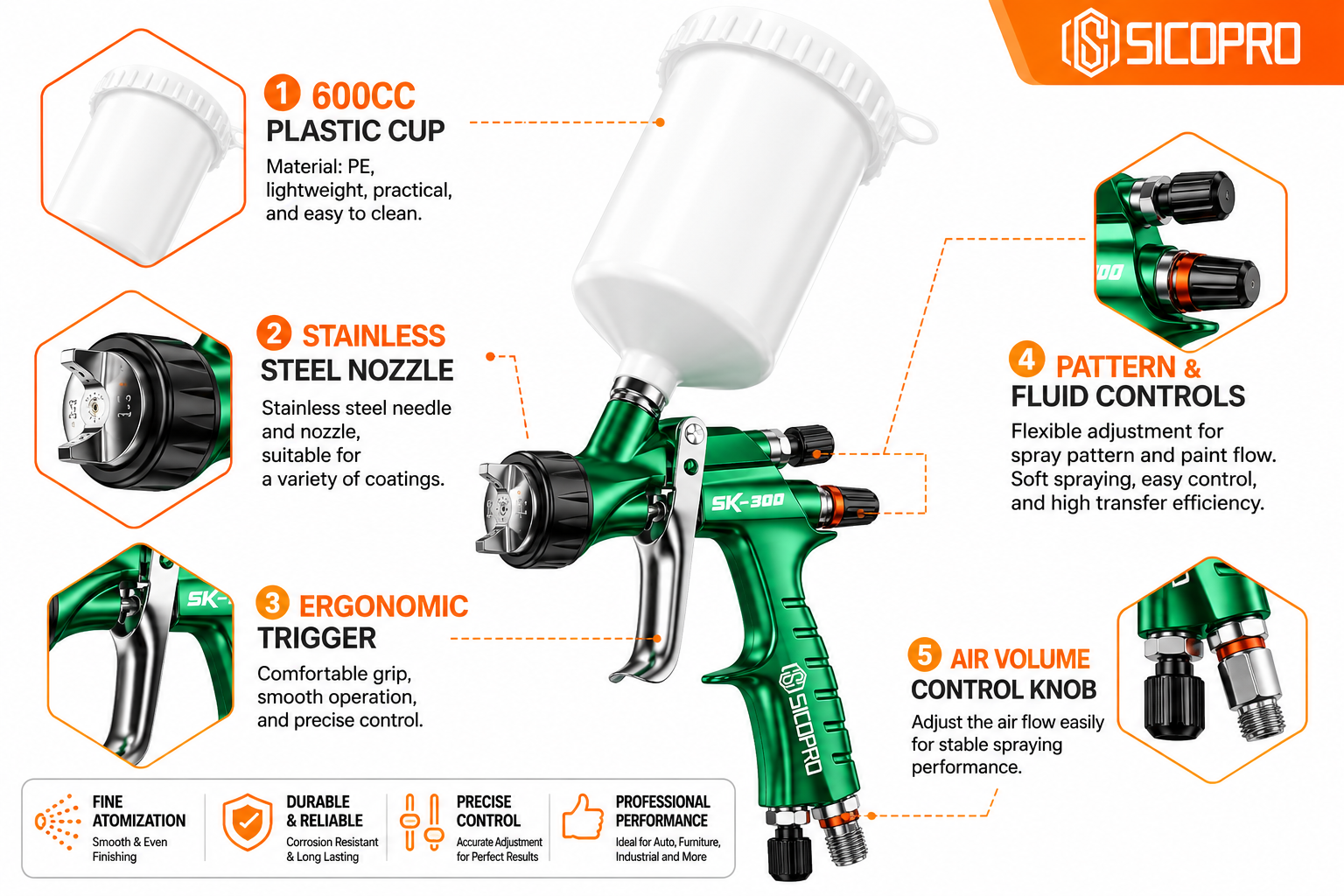
LVLP equipment can deliver excellent transfer efficiency and controlled atomization, but spray-gun setup cannot compensate for poor surface preparation. Contamination, uneven sanding, exposed corrosion, incompatible primers, or dust trapped at the masking stage will show through the final film. For consistent automotive refinishing, surface pre-treatment must be controlled as carefully as inlet pressure and fluid delivery.
1. Inspect and Identify the Substrate
Before sanding, identify whether the repair area contains OEM paint, refinish material, bare steel, aluminum, galvanized steel, plastic, filler, or primer surfacer. Each substrate may require a different cleaning, abrasion, and primer sequence. Mark stone chips, corrosion, solvent-sensitive edges, and previous repair transitions before work begins.
Do not spray directly over unknown or unstable coatings. Perform compatibility checks or isolate questionable layers according to the coating manufacturer’s system recommendations.
2. Degrease Before and After Abrasion
Remove road film, silicone, wax, polish residue, fingerprints, and shop contamination before sanding. Otherwise abrasives can drive contamination into the existing finish. Use the cleaner specified for the substrate and paint system, applying it with one clean cloth and removing it with another before the solvent evaporates.
After sanding, repeat the approved cleaning process. Pay special attention to panel edges, handles, seams, body lines, and lower sections where contamination accumulates.
3. Build a Uniform Sanding Profile
Select abrasive grade according to the next coating layer. Feather damaged edges gradually so the transition cannot be felt by hand. Keep the sanding scratch uniform across the repair zone; isolated coarse scratches may remain visible after basecoat and clearcoat.
Use guide coat during primer-surfacer blocking to reveal low spots and remaining texture. Blow dust away using clean, dry compressed air only where shop procedures permit, then vacuum the work area rather than redistributing dust through the booth.
4. Treat Bare Metal and Repair Areas Correctly
Remove corrosion completely and apply the coating system’s approved metal treatment or primer where required. Do not leave bare metal exposed while other shop operations continue. For plastic components, use the specified cleaner, abrasion method, antistatic procedure, and adhesion promoter when the coating system calls for them.
Before loading an air spray gun, verify that primer edges are fully cured, sanded, and compatible with the planned sealer or basecoat. Solvent-sensitive repair edges can swell during application and create mapping.
5. Final Clean, Tack, and Mask
After final sanding, inspect the panel under strong directional light. Remove dust from recesses and panel gaps, then perform the final cleaner step using lint-free materials. Use a compatible tack rag lightly; excessive pressure can transfer resin or leave marks on sensitive surfaces.
Mask so paper and film cannot flap into the wet coating. Keep masking edges outside the primary spray zone where possible. Confirm booth cleanliness and control static, especially on plastic parts and dry winter days when dust attraction increases.
A Less paint waste LVLP spray gun setup starts with a clean, uniform substrate because contamination or poor featheredge preparation forces extra coats, sanding, polishing, or complete refinishing. Once pre-treatment is verified, the next production concern is maintaining long-hour spray safety without sacrificing finish consistency.
Related SEO Terms
LVLP spray gun, orange peel paint defect, automotive refinishing, vertical panel spraying, spray gun atomization, dynamic inlet pressure, fluid delivery adjustment, clearcoat application, automotive clear coat, paint viscosity control, spray gun distance, gun travel speed, spray overlap technique, wet edge control, paint leveling, spray booth temperature, clearcoat reducer selection, fluid tip size, spray gun air cap, paint transfer efficiency, automotive paint texture, spray pattern control, large panel refinishing, vehicle body painting, paint film build, coating viscosity, automotive spray technique, clear coat orange peel, spray-out panel testing, professional spray gun, auto body shop, collision repair, automotive painter, refinish technician, bodyshop paint department, vehicle refinishing, paint booth operator, automotive coating specialist, spray gun maintenance, spray gun component interchangeability.
READ MORE