A clean setup is only useful when the painter follows a disciplined panel sequence. Many finish defects come from poor movement planning rather than poor equipment. Before spraying, I study the panel shape, decide where to start and stop each pass, and plan how I will keep the wet edge alive without overloading edges, crowns, and body lines.
For a door, I usually begin with edges and recessed areas, then move to the open face. For a fender, I pay attention to the arch and upper crown because those areas can collect extra material if the wrist slows down. For a hood, I plan my walking path so the gun stays the same distance from the center to the edge. On bumper covers, I avoid bending only my wrist around corners; I reposition my body to keep the fan square to the surface.
The first basecoat pass should be controlled and even. I focus on orientation, not heavy coverage. Each following pass should overlap consistently, usually around 70 percent for color work. If the color is metallic or pearl, I reduce uneven speed changes and avoid arcing the gun at the end of each stroke. A final control coat may be applied when the paint system recommends it, but it must be done with correct distance and pressure so the flake lands evenly.
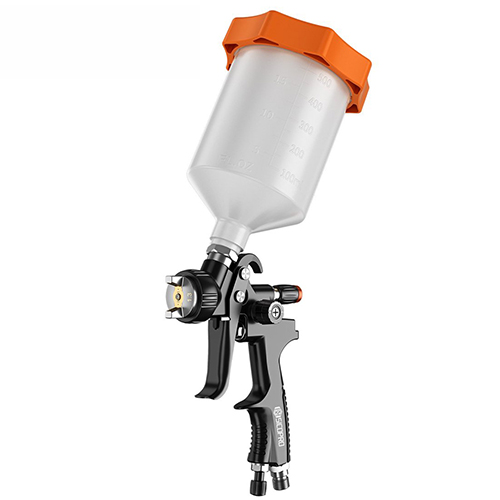
For clearcoat, the first coat should establish gloss without flooding the panel. The second coat should build depth and flow while staying within the flash window. A lvlp spray gun Professional Automotive Tools approach helps reduce overspray, but the painter still needs proper rhythm. Watch the booth light reflection. If the reflection looks broken and grainy, the coat may be too dry. If it waves and starts to sag, fluid delivery, speed, or distance needs correction.
Before every major job, I test the air spray gun on masking paper and confirm trigger control. I start moving before pulling the trigger fully and release the trigger after passing the panel edge. This keeps material from piling up at the beginning and end of the stroke. I also maintain a clean hose path so the hose does not drag against the panel, touch fresh masking, or interrupt my movement.
The final result depends on repeatability: same distance, same angle, same overlap, same speed, and correct flash time. When the panel is sprayed as a planned sequence, the finish requires less denibbing and polishing. The final related procedure is cleaning and maintenance after spraying, because even excellent technique will fail when the gun is contaminated or worn.
SEO Keywords
multi-size nozzle spray gun, LVLP automotive spray equipment, professional car refinishing gun, automotive paint spray tool, low overspray paint gun, car body repair spray gun, basecoat spray gun setup, clearcoat spray gun nozzle, primer spray gun nozzle, 1.3 mm spray nozzle, 1.4 mm spray nozzle, 1.7 mm primer nozzle, 2.0 mm high-build primer nozzle, gravity feed paint sprayer, low air consumption spray gun, automotive refinishing equipment, collision repair paint gun, body shop spray tool, professional panel painting gun, vehicle repainting spray gun, spray gun for car panels, fine atomization spray gun, adjustable fan spray gun, fluid control paint gun, spray pattern adjustment tool, car clearcoat application gun, metallic basecoat spray gun, waterborne paint spray gun, solvent basecoat spray gun, auto body painter tools, collision repair shop equipment, vehicle restoration paint tool, bumper repair spray gun, fender refinishing spray gun, door panel painting gun, car paint technicians, auto body repair professionals, automotive refinishing suppliers, professional spray booth users, custom car painting workshops.