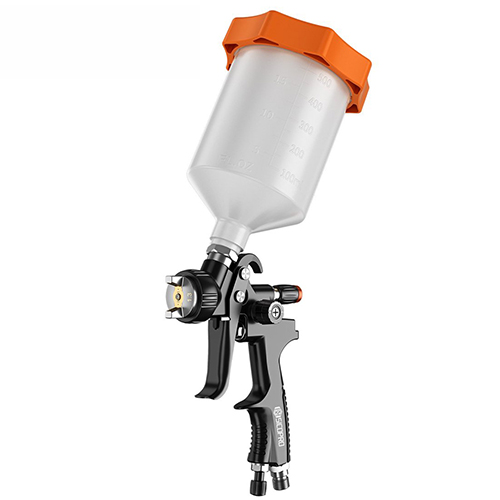
A spray gun is a precision tool, not just a paint delivery device. In a production body shop, poor maintenance can quickly become poor finish quality. A clean and correctly serviced lvlp spray gun Professional Automotive Tools system gives painters stable atomization, predictable pattern shape, and repeatable material flow from the first repair order to the last job of the day.
Clean Immediately After Spraying
Do not let primer, basecoat, or clearcoat cure inside the gun. Empty the cup, wipe remaining material, and flush the fluid passage with approved cleaner. Pull the trigger while flushing so cleaner moves around the needle and through the nozzle. Remove the air cap and clean it separately with a soft brush. Pay special attention to horn holes because blocked air passages cause distorted fan patterns.
Avoid soaking the entire gun body unless the manufacturer allows it. Long soaking can damage seals, packing, and internal lubrication. Clean threads, cup connections, and the nozzle face, then dry with clean compressed air. Lubricate moving points lightly where recommended, but keep lubricant away from the air cap and fluid nozzle area to prevent contamination.
Inspect Wear Parts Regularly
The needle tip should be straight and smooth. A bent or worn needle can cause dripping, uneven fluid control, or poor shutoff. The nozzle seat should be clean and free from scratches. If the gun leaks from the tip after trigger release, inspect the needle, nozzle, spring tension, and packing adjustment. Do not overtighten the nozzle because damage to the seat can create permanent spray defects.
Check the air cap face for impact marks. Dropping the gun can deform cap openings and change the fan permanently. If one side of the pattern is consistently heavy after cleaning, rotate the cap 180 degrees during a pattern test. If the problem moves with the cap, the cap is the cause. If it stays in place, inspect the nozzle, needle, or internal fluid passage.
Troubleshoot With a Process
When using an air spray gun, diagnose defects systematically. Pulsing spray may come from a loose nozzle, clogged cup vent, low material level, or air entering the fluid passage. Coarse atomization may come from low working pressure, thick material, incorrect nozzle size, or restricted airflow. Dry spray may come from excessive pressure, wrong reducer speed, long spray distance, or moving too fast.
Build a daily checklist for the booth: drain the compressor, check filters, inspect hose condition, verify regulator response, clean the gun, and run a test pattern before spraying a vehicle. Also keep separate guns or nozzle sets for primer, basecoat, and clearcoat when possible. Cross-contamination between materials can create adhesion problems, dirt nibs, or gloss issues.
Professional maintenance saves time because it prevents guesswork. A painter who understands cleaning, inspection, and pattern diagnosis can correct problems before they reach the panel. That discipline protects material cost, booth time, and customer satisfaction.
SEO Keywords: LVLP spray gun, adjustable pressure spray gun, automotive spray gun, professional spray gun, car paint gun, gravity feed spray gun, pneumatic paint sprayer, air paint sprayer, paint spray tool, low overspray spray gun, automotive refinishing gun, clearcoat spray gun, basecoat spray gun, primer spray gun, detail spray gun, car refinishing spray gun, auto body paint gun, compressed air paint gun, paint atomization control, spray gun pressure adjustment, fluid control tuning, fan pattern calibration, transfer efficiency, low pressure painting, automotive coating application, paint booth spraying, panel repair painting, clearcoat finishing service, basecoat blending service, auto body shop tools, collision repair technicians, automotive painters, car restoration workshops, refinish paint professionals, vehicle repair centers, custom car painters, spray gun distributors, paint equipment suppliers, professional coating users, automotive tool buyers
READ MORE