How Professional Painters Choose Automotive Spray Guns for Different Car Coating Tasks
In professional automotive refinishing workshops, experienced painters understand that different coating stages require different spray gun configurations. Using the correct spray gun setup ensures proper atomization, consistent coating thickness, and improved paint transfer efficiency. Selecting the right equipment also reduces overspray and minimizes material waste.
This article explains how professional painters select spray guns for primer, basecoat, and clear coat applications based on real automotive painting workflows.
1. Spray Gun Selection for Primer Application
Primer is typically thicker than basecoat or clear coat, so it requires a spray gun setup that can handle higher material viscosity.
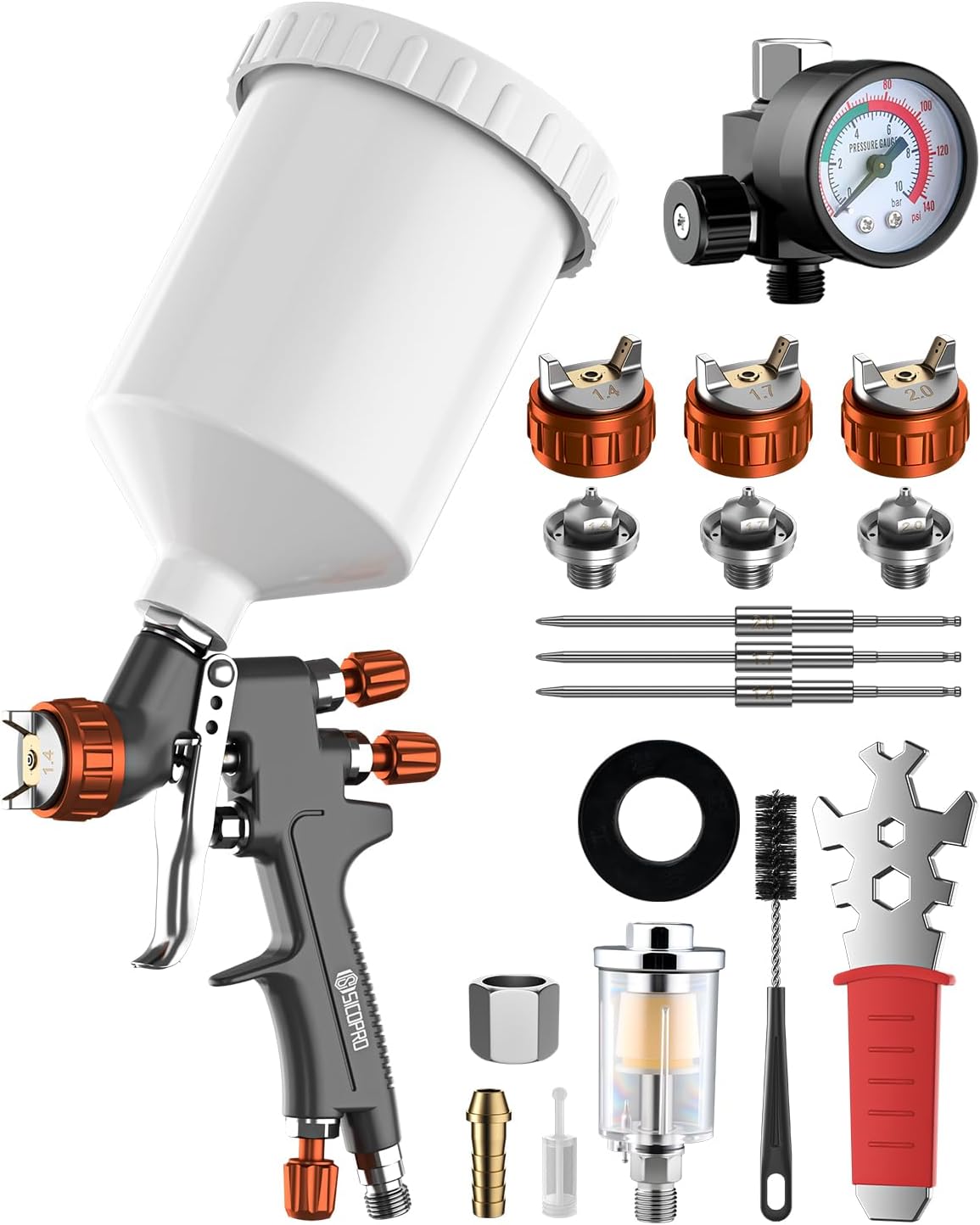
Professional technicians usually select spray guns with larger nozzle sizes when applying primer. This allows the coating material to flow smoothly without clogging the fluid nozzle.
Typical setup used by automotive painters:
Using an appropriate automotive spray gun setup during primer application helps achieve proper surface filling and strong adhesion for the following coating layers.
Before spraying, technicians normally perform a test spray on a panel card to ensure the spray pattern is uniform and the material flow is stable.
2. Spray Gun Setup for Basecoat Application
Basecoat spraying requires much finer atomization compared to primer. This is especially important when spraying metallic or pearl finishes, where uneven atomization can cause color inconsistency or striping.
Professional painters usually prefer precision spray guns such as the LVLP spray gun, which provides excellent atomization while using lower air pressure. This helps maintain better paint transfer efficiency and reduces overspray.
Typical basecoat setup:
During spraying, painters maintain a consistent arm movement and keep the spray gun perpendicular to the vehicle panel. This technique ensures uniform color distribution across the entire surface.
3. Clear Coat Application for High Gloss Finishes
Clear coat spraying is one of the most critical steps in automotive painting because it determines the final gloss level and surface smoothness.
Many professional painters rely on high-precision equipment such as the sicopro spray gun to achieve smooth atomization and stable spray patterns. Consistent trigger control and correct spray distance are essential to prevent defects like runs, sagging, or orange peel.
Recommended clear coat technique:
Step 1: Adjust air pressure according to clear coat viscosity.
Step 2: Set fluid control to achieve medium paint flow.
Step 3: Maintain a spray distance of 15–20 cm from the panel surface.
Step 4: Apply clear coat using a 50% overlap pattern for consistent coverage.
This method allows the clear coat to level properly, producing a high-gloss automotive finish.
4. Practical Workflow Used in Automotive Body Shops
In professional collision repair centers, painters typically follow a structured workflow when using spray guns.
Typical process includes:
Surface preparation and sanding
Primer spraying and curing
Basecoat color application
Clear coat finishing
Final polishing and inspection
Throughout this process, technicians adjust spray gun parameters according to coating material type and environmental conditions.
Using the correct car paint spray gun configuration ensures stable coating quality and improves overall productivity in automotive refinishing workshops.
Conclusion
Professional automotive painters rely on proper spray gun selection and setup to achieve consistent coating quality. Different stages of vehicle painting—primer, basecoat, and clear coat—require different nozzle sizes, atomization performance, and spraying techniques.
By selecting the correct equipment and following proper spraying procedures, technicians can improve paint transfer efficiency, reduce overspray, and consistently achieve high-quality automotive finishes.
READ MORE