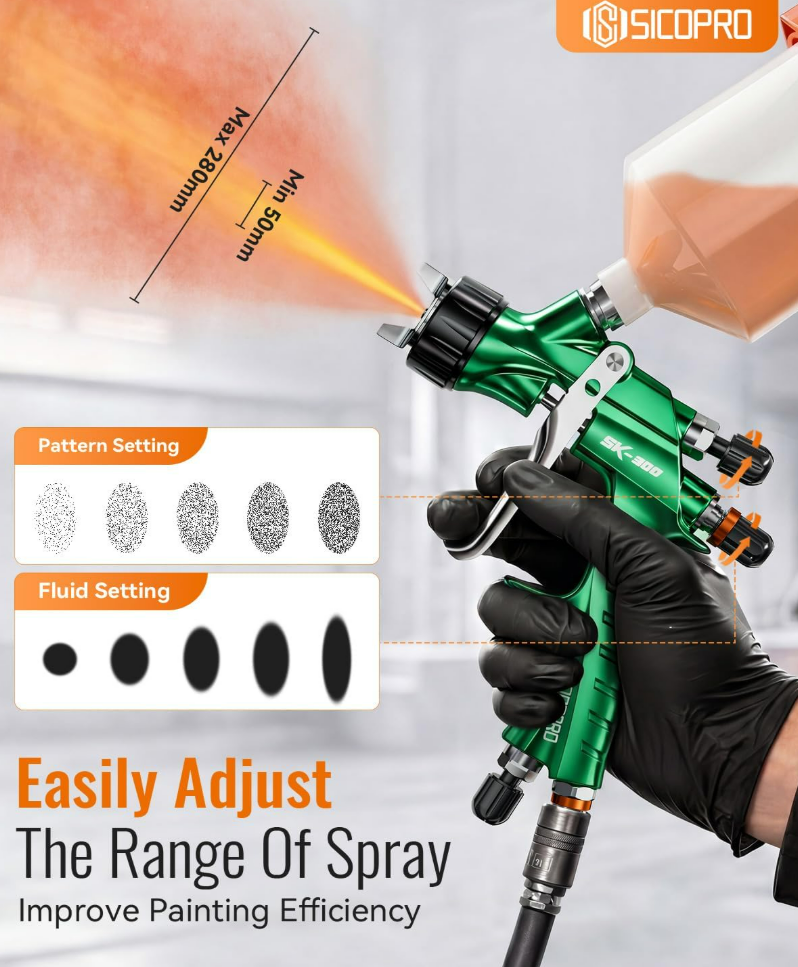
Air pressure control is where many refinish problems begin. Painters often adjust fluid, reducer, or hand speed first, but unstable air delivery can be the hidden cause behind dry spray, poor flow-out, rough clearcoat, and inconsistent metallic laydown. A disciplined lvlp spray gun Professional Automotive Tools process starts with measuring real working pressure, confirming air volume, and understanding how the gun behaves under trigger load.
Measure Pressure with the Trigger Pulled
The most common mistake is setting pressure while the gun is idle. Static pressure is not the same as dynamic spraying pressure. Install a quality regulator at the gun handle or near the gun, pull the trigger fully, and then set the inlet pressure according to the coating system and gun recommendation. When the trigger is released, the gauge may rise. That is normal. The number that matters is the reading while air is flowing.
Confirm Air Volume and Hose Flow
An LVLP gun uses lower air volume than many traditional guns, but it still needs steady supply. A small compressor, narrow hose, clogged filter, or restrictive quick coupler can cause pressure drop during long passes on hoods, roofs, and quarter panels. If the fan starts strong and fades mid-pass, inspect the air line before blaming the coating. Use clean, dry compressed air and drain moisture from the compressor tank regularly.
Even a finely built air spray gun cannot atomize correctly if the air supply contains water or oil. Moisture can create fisheyes, dull spots, and micro-blistering later in the finish. Install a water separator at the wall and use a final filter near the gun when spraying clearcoat. For production shops, document the regulator setting, hose length, compressor pressure, and booth temperature so technicians can repeat a successful setup.
Balance Pressure with Fluid Delivery
Too much air pressure may create excessive overspray and a dry edge, especially with fast reducers. Too little pressure may leave large droplets that build orange peel or heavy texture. The correct setting is where the pattern is evenly atomized without blowing material past the panel. Test on masking paper, then make a moving pass. If the surface looks dry at normal distance, increase fluid slightly or reduce travel speed before making a large pressure change.
Use Pressure to Protect Transfer Efficiency
LVLP equipment is valued for controlled transfer. To keep that advantage, maintain 6 to 8 inches of gun distance and keep the fan perpendicular to the surface. If you stand too far back, atomized droplets lose solvent and land dry. If you stand too close, the wet film may pile up and sag. Air pressure is only one part of the system; distance, overlap, fan width, and reducer selection must work together.
Check Pressure During Multi-Panel Jobs
On a full side repair, pressure may change as the compressor cycles or another technician uses air tools. Watch the surface and listen to the gun. A stable gun has a consistent sound and fan shape. If tone changes, stop and check the regulator. It is better to pause before the second coat than to repair a rough, uneven clearcoat later. Professional results come from controlling variables, not spraying faster.
SEO Keywords / Tags
LVLP spray gun, automotive spray gun, stable atomization spray gun, car paint spray gun, professional spray gun, automotive refinishing gun, clearcoat spray gun, basecoat spray gun, low volume low pressure spray gun, gravity feed spray gun, paint spray gun, pneumatic paint sprayer, spray gun for cars, auto body paint gun, vehicle spray gun, car refinishing spray gun, professional automotive paint tool, automotive clearcoat application, spray gun atomization, spray pattern control, fluid tip setup, fan pattern adjustment, spray gun air pressure, automotive paint transfer efficiency, orange peel prevention, dry spray troubleshooting, clearcoat flow-out, refinishing paint equipment, gravity feed paint gun, compressed air paint gun, HVLP spray gun, LVLP automotive spray gun, automotive paint sprayer, detailing spray gun, touch up spray gun, paint gun for car, car body spray gun, refinished painting spray, professional paint spray tool
READ MORE